
17/08/2017

16/08/2017
14/08/2017
Christian Boltanski - Personnes


ART or DESIGN: the textile is used as representation of something which wore someone, life form which is missing
TEMPORARY or PERMANENT
LARGE SCALE or SMALL SCALE
TRANSFORMING and/or DEFINING and/or FORMING
IMMERSIVE and/or DISTANT
PATTERN and/or COLOUR and/or REPETITION and/or SHAPE
You’ll see that, in addition to the garments, the noise of heartbeats permeates the
exhibition. Why do you think this might be?
It is a collection of heartbeats as Christian says in the interview https://www.youtube.com/watch?v=Lv7tatnhFAc&feature=youtu.be. The heartbeats when I was watching the clip were a little bit disturbing to me. I can imagine the atmosphere when walking there throughout the show. The heartbeats are like drums announcing the passing time in combination with the garments our path to the end - death.
To what extent are the textiles transformed into something other than fabric?
The textiles can represent death people and the squares their grave as it is described in https://www.theguardian.com/artanddesign/2010/jan/17/christian-boltanski-personnnes-paris-review. What is a story behind the textiles, who wore it, what happened to them, that would be questions which can appear in my mind? There is the hand of God which is lifting a group of garments to the roof to be immediately let to fall down. It is like a searching who can live or who can not, I just guess, heaven and hell.
What’s the significance of the installation title – and of the mechanical grabber?
Personnes - a French word for people and the same time nobody. Perfect title connection between the passed people an people visiting the show. The life form walking between garments with heartbeats reminding the mortality. The grabber is a process of chance to be alive or dead. Something else decides it.
What associations does this work conjure up in your mind?
The pile of garments remind me the piles in a concentration camp. The Holocaust. The wars. There is a feeling of a form of sorting systems. It is the grid, who decided what a piece will be there and there and why some are on the pile? Rasicms? Could be.
The wasting came to my mind as well but it was not mentioned in researched materials.
Marianne Straub
It was not easy to find more information about Straub moquettes. Anyway, there is a photo collection on London Transport web page but it does not work. Thanks to my fellow student Christy - Moved by Breath - she saved the photograph of the tube where we can see the art of Straub in its beauty inside the wagon.


ART or DESIGN: I think it is an art designed for a seat.
TEMPORARY or PERMANENT: Temporary till it needs to be changed.
LARGE SCALE or SMALL SCALE: It is evident if we approach to one seat it is a relatively small scale but when we see it as the whole piece in an empty bus and we calculate all vehicles we get a large scale.
TRANSFORMING and/or DEFINING and/or FORMING: Certainly the work transform the space, it makes it more vibrant and cosy.
IMMERSIVE and/or DISTANT: you can touch it when you are sitting on it or you can watch as a whole.
PATTERN and/or COLOUR and/or REPETITION and/or SHAPE
DENOTATION:
It is an upholstery. It is expected to be resistant to daily use for people sitting on every day in thousands of numbers. It is expected to be easily cleaning and to have a long life. It has nice combinations of blue and green dark colours and their shades.
CONNOTATION:
The pattern could represent somehow an order in the chaos around our lives. It put harmony when people are walking forth and back from tube to tube. The design of the pattern and its colour has a restful feeling. It must have had a great impact on the whole atmosphere when people were travelling. When I remember our bus interior 20 years ago it was shady not cosy space comparing with this great examaple of used textiles, its pattern and colour.
ART or DESIGN: I think it is an art designed for a seat.
TEMPORARY or PERMANENT: Temporary till it needs to be changed.
LARGE SCALE or SMALL SCALE: It is evident if we approach to one seat it is a relatively small scale but when we see it as the whole piece in an empty bus and we calculate all vehicles we get a large scale.
TRANSFORMING and/or DEFINING and/or FORMING: Certainly the work transform the space, it makes it more vibrant and cosy.
IMMERSIVE and/or DISTANT: you can touch it when you are sitting on it or you can watch as a whole.
PATTERN and/or COLOUR and/or REPETITION and/or SHAPE
DENOTATION:
It is an upholstery. It is expected to be resistant to daily use for people sitting on every day in thousands of numbers. It is expected to be easily cleaning and to have a long life. It has nice combinations of blue and green dark colours and their shades.
CONNOTATION:
The pattern could represent somehow an order in the chaos around our lives. It put harmony when people are walking forth and back from tube to tube. The design of the pattern and its colour has a restful feeling. It must have had a great impact on the whole atmosphere when people were travelling. When I remember our bus interior 20 years ago it was shady not cosy space comparing with this great examaple of used textiles, its pattern and colour.
13/08/2017
Research point - Wrapped trees
The wrapped trees" I do not really think that wrapping trees would be of my interest but the result viewed in photographs are really interested. It is the mood when sun shining through the fabric wrapped around the trees. The scenery captivated me a lot, space turned in something magical. On the second picture where the light changed the fabric into something metal, structured like a fractal is interesting as well.
The use of fabric is amazing and interesting. It must have been great to be there and see the work when was moving in wind weather, walking around and see it.


The use of fabric is amazing and interesting. It must have been great to be there and see the work when was moving in wind weather, walking around and see it.


Christo and Jeanne-Claude
It is amazing that someone can make such a large scale project. I do not see a reason to do it but it must be eye catching to see it in the space as it is The wrapped Reichstag piece. The running fence has great flexibility to move and make nice shapes when the wind blows. The scale of the projects is stunning. I love The Floating Piers, the extension of the streets is also stunning. Great work and I do not know why, because of the scale, because it is unusual because it is somehow magical. I love it.
http://www.christojeanneclaude.net/

http://archive.thefloatingpiers.com/completed
http://www.christojeanneclaude.net/
http://archive.thefloatingpiers.com/completed
Research point - Architectural uses of textiles
There are many examples how textiles have the influence to change a space into something interesting, fresh, appealing to explore it.
https://www.architonic.com/en/story/susanne-fritz-the-very-fabric-of-architecture-textile-use-in-construction/7000625
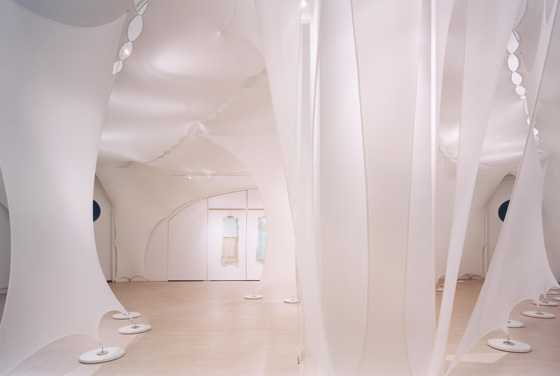
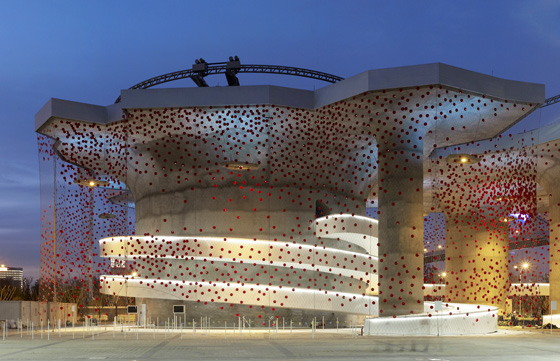
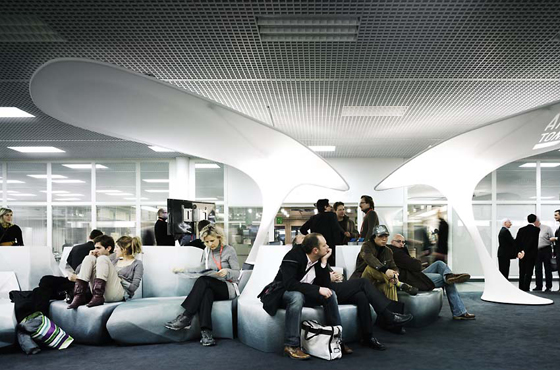
A house with a textile skin
http://www.archdaily.com/423832/passive-house-with-textile-skin-blaf-architecten
https://www.architonic.com/en/story/susanne-fritz-the-very-fabric-of-architecture-textile-use-in-construction/7000625
A house with a textile skin
http://www.archdaily.com/423832/passive-house-with-textile-skin-blaf-architecten
Subscribe to:
Posts (Atom)