Showing posts with label Exercise. Show all posts

02/07/2017

Textiles Exercise 1

How would you define 'sustainability'?

If the textile production is one of the most polluting industries in the world, their life cycle must be taken into consideration. There are products which have a shorter life than others such as a carpet cold have a longer life than a fashion shirt. Producers, as well as designers, end users, must be responsible according to waste management. Re-using raw materials, their recycling is in focus for decades. For example, plastics (polyester, polypropylene) are recycled/reused for the nonwoven industry of filters, diapers, geotextiles. The consumption in the balance of recycling.


Sustainability:

  • Bussines/Industry: the western culture is based on consumption. The automotive industry is an example where everlasting sustainability keeps them in sales numbers. How we will deal with continuous consumption?
  • Environment: the focus on 'green' policy to not pollute Earth.
  • Resources: Sustainability to exploit alternative energy
  • Food waste change
  • Recyclate materials


Sustainability in production and consumption of textiles:


  • Raw material. Land and water used for grow natural fibres. Fossil extraction for synthetic fibres.
  • Production: energy and waste management, added chemicals, questions about workers/customers safety issues,
  • Use/ consumption: durability and stability, longevity issue, recyclization, treatments issue

07/05/2017

Exercise 3 Photography

Derek Trillo, The Cheshire Plain Beeston Castle

A photograph was taken from Beeston Castle. It took some time to find the place on Google maps, but I found it. It is interesting to see the place from above and from the street. The view is completely different of course. I was always amazed how our mind built maps which we use for orientation. Our mental maps are different than the "real" maps. I know the moment when mind comparing its mental map with a geographical map. A moment of WOW I had completely another idea how it should look the map. As a child I tried to draw a map from my memory, I was satisfied, but it was entirely different from the real.


The ground level photographs look like a different place, we do not see the same details. We are not able to recognise the lines, the small "wood".

The same situation is in the second photograph. The view from a high attitude gives us a lot of information, we can see more building, more roads. Seeing the same place from the ground level we get a different image of the place, more details of closest objects. Seeing it from above we can get the structure of the town divided by roads for example.

John Davies, Agecroft Power Station, Salford, 1983

I really like the photograph. Without spending some time I would certainly overlook the details here, like the football match or training, the horse on the left corner. We can see those information thanks to the elevated viewpoint otherwise we could not. If we have a closer photograph of the towers we could not see the football players. The towers would be out of its context. Great example how to introduce an object into the place it is. The effect of being able to see the football game in the shadow of the towers is somehow surreal, the connection between pleasure and current technology in that time. It reminds me, Julian Verne's stories. Really big objects - towers and small creatures playing the game.


09/04/2017

Photography Exercise 2

To what extent did you consider the composition, viewpoint or lighting?
The photographs were from 2008 when I was in Tunisia with my wife. In that time I did not too much about composition, and most of the photograph are "content empty".

Why did you take a photograph rather than just buying a postcard?
I love to make photographs. When I was searching the photographs, I have noticed that the photographs of sightseeings are not so interesting that those which depict a moment of the place. The photograph of the relics was empty and dull.


What are special qualities of these images?
The quality is that I remember really nice moments with my wife of course. The second shot of bathroom is interesting because I thought the tube was against the door not to the right. The third image reminds me the sunset and how beautiful it is to watch it on the beach.


Do you think mobile equipment devalues the final image if little or no thought has gone into the photography?

I am not sure, it depends on why we want to take a picture. A mobile phone is great to capture any moment which crossed our path. It easy to use, quick, nearly no weight. The quality is good for me as a user of iPhone. I love to search photographs in my mobile and remembering the space and time. Here are pictures which were taken last week in Geneva Switzerland. The first photograph is a bar in a Hotel I stayed, the second is a part of a park. Another think of mobile is a panoramic function which I was trying for the second time. I think it does not matter which equipment we use. There always be the good and bad quality of photographs.


Exercise 1

I have made two photographs from my attic window. One was made by a fisheye lens Samyang 8 mm and the second by lens Canon 135 mm.

The wide point of view in the first picture gives information it was taken from a roof of a house. We can see a wood, a pool, a town. On the other hand, the second telephoto picture shows us only a part of the same space we can see in the first picture. We receive only a separated information in contradiction of the first wide photograph. We are not able to say it is the same space or the day the photographs was taken.


01/04/2017

Project 2 Exercise 4

Is the photography simply providing an authentic record of the artwork - photography as evidence - or is it part of the artwork itself?

The photograph is a window which can convey us a view of nearly anything. We can travel through time and space at our desk in the living room and drink our preferred drink.

Is photograph as evidence?

Indeed yes, a picture can capture a very moment of an event. If the camera is in "right" hands, the photographs can have a mystique tone. I love Lartigue's photographs, especially what they do with the mind.


On the other hand, there are photographs without the "mystery" tone, but they convey the space and time like in these examples in this web link: http://zoehowarth.blogspot.cz/2013/07/land-art-andy-goldsworthy-and-richard.html


The photograph is a "proof" of work which is somewhere in space. Through the photographs we can see it, anybody has access to that work. The work is cut off space and is transferred via paper or screen.

Certainly, the photograph is a part of the Art in it. What the photograph can not transfer are the circumstances when we watch the work via our eyes: the airy contact, many different angles of viewpoints, colours, environment. It is the big difference to see Van Gogh's paintings in photographs and on self-eyes.

12/03/2017

Project 2 Exercise 3


I was always captivated by old family's photographs. As a child, I was mainly focused on the aspect how we looked like and where the photo was taken.  Today, I am really glad that I can see the people who passed away in the photograph. It is a form of memory, precise memory I would say because the image in our mind is not so precise. Maybe "precise" is not the right word, is not physically present, just a thought, an individual image which we can not print on paper. The photograph we can show to anybody else, we can share the memories, one of the photography's great feature.

The digital revolution killed the printed photography. I let to print my photographs in 2010. Now I have a digital photo book in Adobe's Lightroom. The searching box of photos is amazing, you can put the pictures next to each other, and you can let your mind to tell a story, recall memories. It is great to have a digital store on our computers, but the real present and freedom of a photograph hold in hand have its own miracle which a screen of our PC has not.


07/03/2017

Exercise 2 Project2

Photography is a framed frozen moment of a space in a time. The perspective of content is influenced by a lens which was used to shoot the image and thus the dimension of space as same as we feel. The time - longer shutter can reveal a movement by the blurriness of objects, but it is relative if we take in account early photographs where exposition time was very longer, and the pictures of streets looked empty.  I see the unique feature in a camera that everyone can use it to record the world around us and catch a time.

Photography is the most realistic portray of space and is similar to our images in mind. As I wrote that sentence is it really true? Last week I visited a place where I was in my childhood, space, buildings and roads were situated in different composition to my images which I have been holding for 33 years. It was shocking, I could not believe it is the same space, but it was. The perception of a child was somehow different.

What another creative art form can deal with time if we do not talk about film strip? I think the medium could be games, virtual reality (space), programmed to show the past or future in real or imaginary space. Do we really be able to recognise we are in virtual reality?


05/03/2017

Exercise 1 Project 2

Derek Trillo's Passing Place: two blurriness figures are going to each other on stairs. Of course, the feeling is movement, and it looks great. 

Harold Edgerton's Bullet and Apple: for me a technical photo to capture an action which human being eye is not able to see.

Harold Edgerton's Multiflash tennis serve: an image of a movement nearly step by step in one picture. We can see what actions are there when a tennis player serves.

Lartigue's cousin: it is a strange image. A Woman above stairs. Frozen image where we know that the woman was captured when jumping on the stairs.


26/02/2017

Photography Exercise 2

I choose photographs which I thought looks artistic from my albums.


I like those photographs, especially for their strangeness. The distortion makes the first two photographs they look interestingly for me. The last photograph was over exposed, but after some adjustments, it is the light which makes the object curiously illuminated.

If there is a mental process triggered by watching a photograph (or anything), it is a prove it is "artistic".

I know that when I can shoot a thousand photographs and only a few have the charge to trigger the mental process.

19/02/2017

Exercise 1 Photography

What, in your view, makes photographs unique as an art form?

I think it is the frozen reality, the instant record of an event, the "precise" flat record of a part of the world around us since 1840. We can see objects, people, nature as they actually look like, the art is there when seeing it triggers the mind thinking process.

Photograph and time:

Any photograph is taken in the present. What does it mean? When we look at a picture, we see a past of something which could not be repeated. The photograph is a window into the past of the world which is not same as before. It was a strange feeling to see "first" photographs from 1840 by Talbot, really there were significant changes in the space? What changed are objects, fashion architecture maybe, but the human being and nature look same.

What we mean by 'photographic image'?

We have a digital version of photographs which we can see everywhere especially on a PC screen when we use the internet. Anything which looks as real image is considered as it was a photograph. Even a realistic painting can be considered it is a photograph. There is another thing to be considered, and it is a manipulation. It is a photographic image as well.

Is there a difference between a printed photograph and digital image?

It is an interesting question, I think the printed photograph is a real object build by a matter instead of a digital image which is constructed by a screen. We can see printed photograph by natural light, the digital image we can see only if there is the electricity. I like the idea that printed version is an object of a paper, layers of mixed paints. Both versions are projected through our eyes on the retina and translated to the mind.

21/01/2017

Exercise 4 Cutting Edge

When searching cutting edge web site I found that article about emotional interface design.

http://blog.teamtreehouse.com/emotional-interface-design-the-gateway-to-passionate-users

I like how the author describe the remapped Maslow's hierarchy of needs: the interfaces must be first - functional - they must solve problem for us. Next they need to be reliable - no fail whales please. Our interfaces need to be usable - easy to learn, easy to use, and easy to remember. The piece we often overlook is the pleasure. It is at core of culinary arts, but we find it far too infrequently in the web apps and web sites we use daily.


EMOTIONS IN DESIGN

Babies create bonds with their parents through an interesting loop. When they cry their parents respond by soothing them, which releases calming neurotransmitters in their brain. As this cycle repeats, the baby begins to trust their parents will respond when they need them.

A similar feedback loop happens in interface design. Positive emotional stimuli can build a sense of trust and engagement with your users. People will forgive your site or application's shortcoming, follow your lead, and sign your praises if you reward them with positive emotions.

Tapbots are mentioned as a great example how to put emotions in design but it looks the emotions disappeared in that application. There is not the bird signing and warning when message is long. The design is different and less emotional compare to the picture in the article from 2012.


The design on the right is current. The design lost emotional charge in my point of view.

When reading about the emotions in design I realised that it is a measurement by which I judge applications and games. 

GAMES

I love to play "2D games" and there are really great ones STEAMWORLDDIG, SHOOTER, AXIOM VERGE. These games are fulfilled by great gadgets and ideas which make the games valuable. All three games have great progression in enhancing characters and their abilities. SteamWorldDig is great digging game with lots gadgets which help to dig deeper and deeper. Shooter is great example of great ideas how to work with liquidity, gravitation, magnetism etc. Axiom Verge is classic indy games which I love it for its 8-bit music, picture, the game use progression to unlock places in right time. There are other games that are great, open worlds for instance but these three games are and will always be playable forever for me. I have never play games two times, the SteamWorldDig I ave played two time and I will play it again.

PAGES

I remember when I found this webpage about Meth addiction in Exercise 1: Identifying visual communication. The METH project is great web where audience is involved to explore the Meth addiction. Visitors explore what addiction can cause by responsive design driven by mouse position. The sounds very well support the dark side of Meth addiction. I love that web because it shows a problem by sound and interactive design in its best way. It is informative and I learned a lot about that addiction. I really do not understand why there are too many drugs in new series such as The Night off, Mr. Robot. Watching these series I had feelings that to take a drug is normal and without problems. There was an information you can be addicted and it can cause big problems which can lead to death.

 This webpage is great example how to inform public about Meth addiction.


15/01/2017

Exercise 3 Visual conventions for time and place

Reflect on your research in your learning log.

I must admit that I look for help at other students blogs. Really great blog is MOVED BY BREATH where I search when I feel That I am lost somehow. The blog focused me on key word Graphic Novel and it help me to search on google and Tate web site. When searching for deeper meaning of Graphic Novel I found Eric Shanower's article The Art of Graphic Novel which helped me where to start research history and which media and authors are worth to focus. I ordered some books and still I am waiting for them. Anyway some of them were on iBooks and some frames I put in previous contributions.

It is obvious how valuable the historical paintings are. They can transfer information how man lived and what made for their living. Examples of cave paintings show animals probably it is image of hunting. The time and place is not represented. When see it in front of my desk on monitor I can admire it because of the information it is 35.000 years old and from France. Without these information I would miss these paintings. There would be completely other feeling to see these paintings in the France. We can see crafts and rituals in Egyptian's paintings, we can see figures, what they wear, how they fight but the place and time is not readable, we need more information.

The Bayeux tapestry has written information which tells when and where it happened. Illustration show us creatures, an architecture, object such as ships, weapons. Without the written information we were be able to determine the century and maybe the place because of the shape of ships, architecture and clothes.

In Graphic Novel A Contract With God by Will Eisner we know where we are and in which year. The illustrations depict the atmosphere, the people, they tell the story frame by frame. The story is supported by written information, there are bubbles with written speech, we flow through the story. I like this novel because of the great deep human being stories.

On the other hand there is graphic novel by Klimowski where we have a story without written information. We can determine that the time is contemporary and the place where the story happens is a town and flat of blocks. Klimowski greatly sends his message and let the viewer to his imagination. I really like that approach.

So, it depends on the sender/author what message in which context and time he would like to communicate. If he/she needs to be precise where (space) and when (time) the story happens  the receiver/audience must get enough information about it. If we want to send a message where we need to open viewer's imagination we just send less information maybe without words as it is in Klimowski's Secret novel. The viewer more participate to finish the story. It remind me McLuhan's cold and hot media. In this example I have feeling that story where we get a lot of information is more cold than the story where we have not enough information is hot in McLuhan definition between photography and caricature. The A Contract With God is photography and Secret is caricature. I need time to think about more. I am waiting for another Graphic Novel books and I will see if there are another examples of that idea.

This exercise helped me to realise how information are important to convey a story. The graphic novels are amazing, I love them when I was child and still I love them. Graphic novel is a story frame by frame and we need to fulfilled the missing frames to be a film medium in our mind.


11/01/2017

Exercise 3 Visual conventions for time and place 2

ANDRZEJ KLIMOWSKI

I have bought three books by Andrzej Klimowski and I love them all especiall this beginning is beautiful without words, just our imagination works. Same as a film juxtaposition.


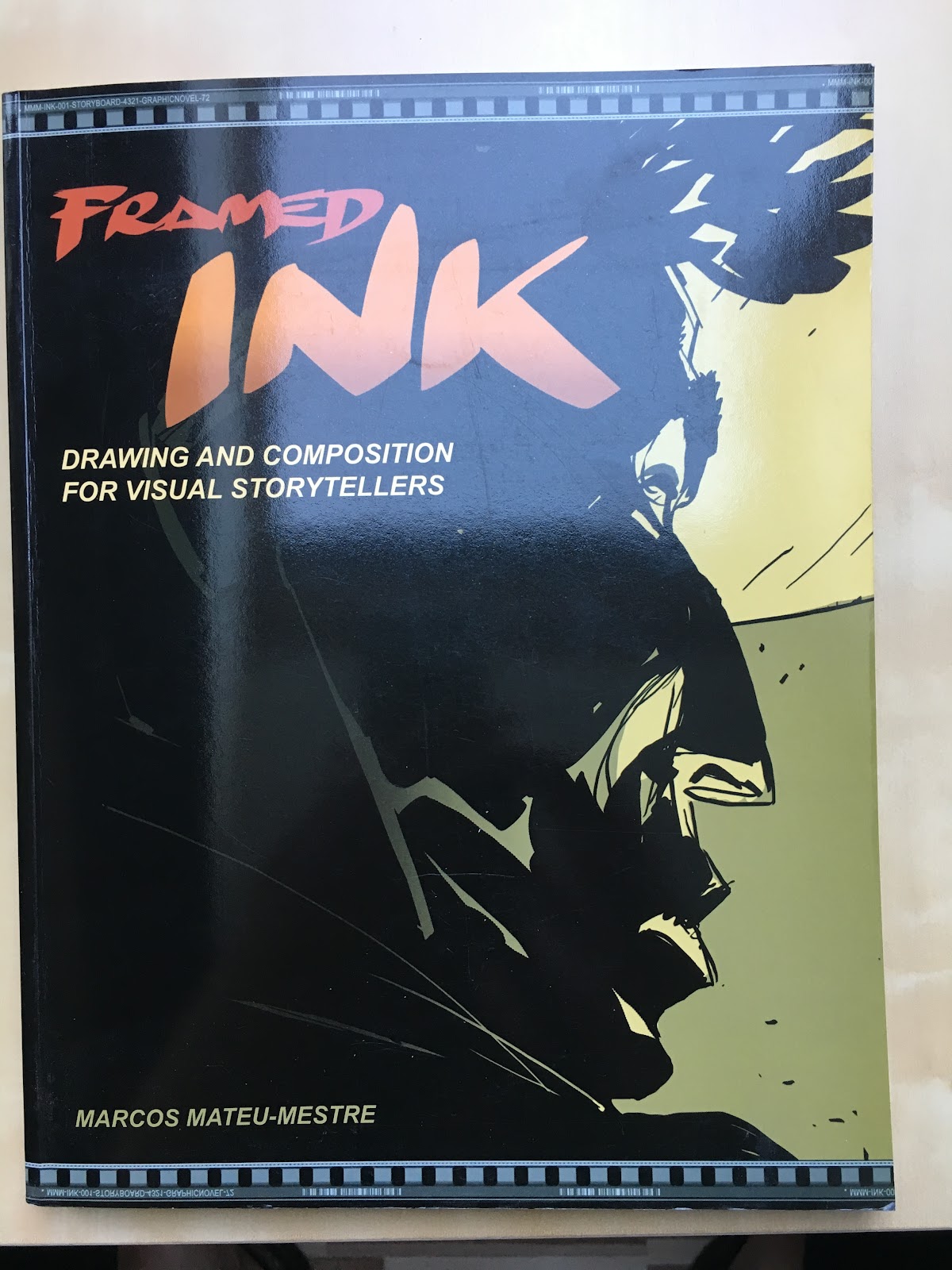
FRAMED INK by MARCOS MATEU-MESTRE 
A "guide book" for any storyteller how to compose a story by frame by frame. Some methods such as how to use negative space surprised me.